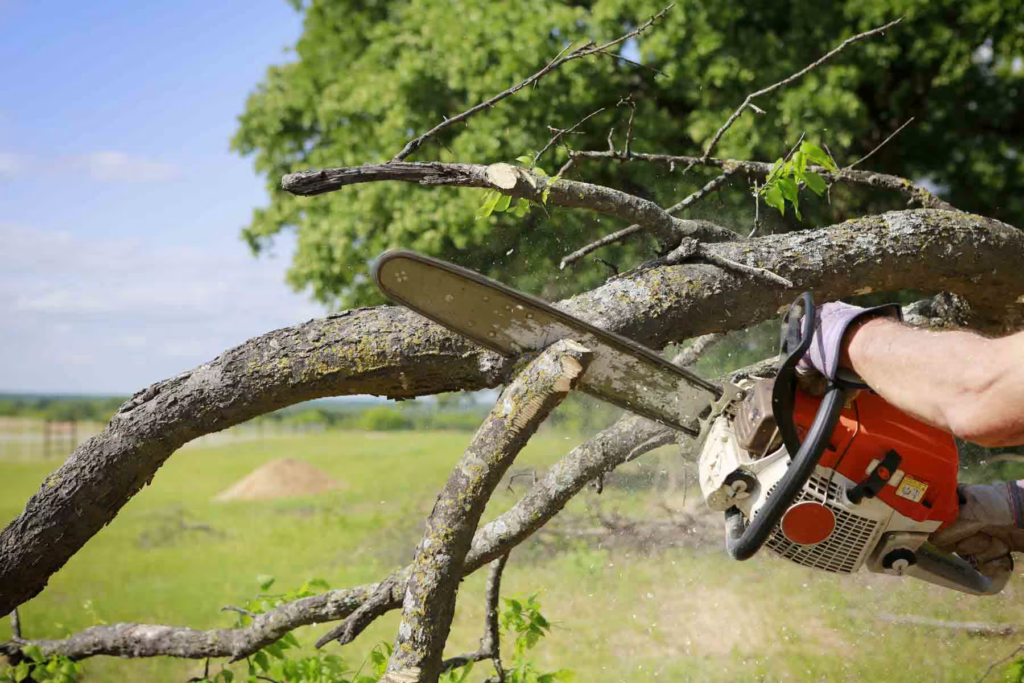
Trees are an important part of any landscape, providing shade, beauty, and value to your property. While regular trimming is essential for keeping trees healthy, it’s equally important to know how to safely trim a tree. Improper pruning can damage the tree, create long-term health issues, and put you at risk of serious injury. Before picking up a saw or climbing a ladder, it’s important to understand the safest approach to tree trimming.
Tree trimming is about much more than cutting off branches. Every cut affects the tree’s future growth and overall health. According to the International Society of Arboriculture, proper pruning techniques help improve tree structure, remove hazardous limbs, and encourage healthy growth while minimizing stress on the tree.
How to Safely Trim a Tree
The first step in learning how to safely trim a tree is determining whether the job can be done safely from the ground. Small branches that can be reached with hand pruners or pole saws are often manageable for homeowners. However, branches located high above the ground or near power lines should always be left to trained professionals.
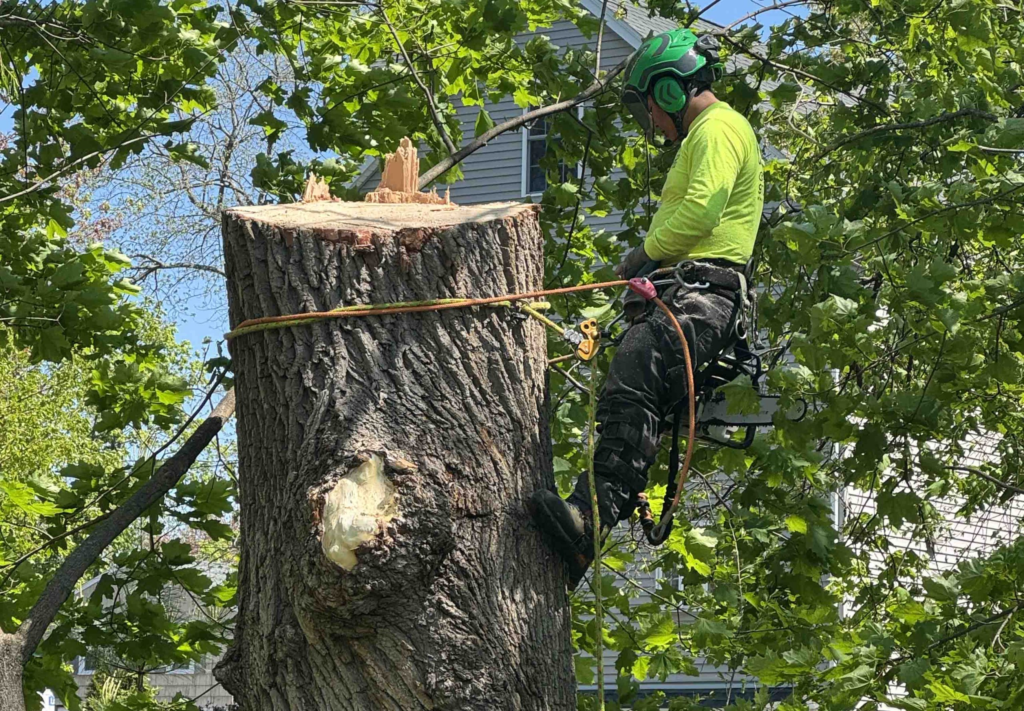
Before making any cuts, inspect the tree carefully. Look for dead branches, cracked limbs, signs of disease, or branches rubbing against one another. Removing damaged or unhealthy limbs first helps improve the tree’s overall condition while reducing potential hazards.
Using the proper tools is essential. Sharp hand pruners, loppers, pruning saws, and pole saws make cleaner cuts that heal more quickly. Dull tools can tear bark and leave the tree vulnerable to insects and disease. Always wear protective equipment, including gloves, safety glasses, sturdy footwear, and a hard hat if working beneath larger branches.
One of the most important aspects of how to safely trim a tree is making proper cuts. Branches should be removed just outside the branch collar, the swollen area where the branch connects to the trunk. Cutting too close to the trunk damages the tree, while leaving long stubs can lead to decay.
Never remove more than about 25 percent of a tree’s canopy during a single trimming session. Excessive pruning places unnecessary stress on the tree and can slow its recovery. If major pruning is needed, spreading the work over multiple seasons is often the healthier approach.
Weather also matters. Avoid trimming during severe weather or high winds. Wet conditions can create slippery surfaces and increase the risk of accidents. In many cases, late winter or early spring is an ideal time for pruning because trees are dormant and it’s easier to see their branch structure.
Ladder safety should never be overlooked. Many serious injuries occur when homeowners attempt to trim trees while standing on ladders. If a branch cannot be reached safely from the ground using proper equipment, it is generally time to call a professional tree service.
Power lines present another serious hazard. Never attempt to trim branches that are touching or growing near electrical lines. Contact your utility company or a qualified tree care professional instead. Electricity can travel through branches and tools, creating life-threatening situations.
The Occupational Safety and Health Administration (OSHA) emphasizes that tree work involving climbing, chainsaws, or elevated work carries significant risks and should only be performed by trained individuals using proper safety procedures.
It’s also important to recognize when a tree has problems beyond simple trimming. Large cracks, hollow trunks, leaning trees, or signs of root damage may indicate structural issues that require professional evaluation. The University of Illinois Extension recommends regular inspections to identify health concerns before they become safety hazards.
Knowing how to safely trim a tree can help homeowners handle small maintenance tasks while protecting both themselves and their trees. However, recognizing your limits is just as important as knowing proper pruning techniques. Large trees, difficult locations, and hazardous conditions are best left to experienced professionals with the equipment and training needed to complete the work safely.
Regular tree maintenance keeps your landscape looking its best and helps reduce the risk of storm damage, falling branches, and long-term tree health issues. By following safe trimming practices and seeking professional help when necessary, you can enjoy healthier trees and a safer property for years to come.
Powered by WebLynx Media